
How Much Weight Can a Residential Cargo Lift Hold?
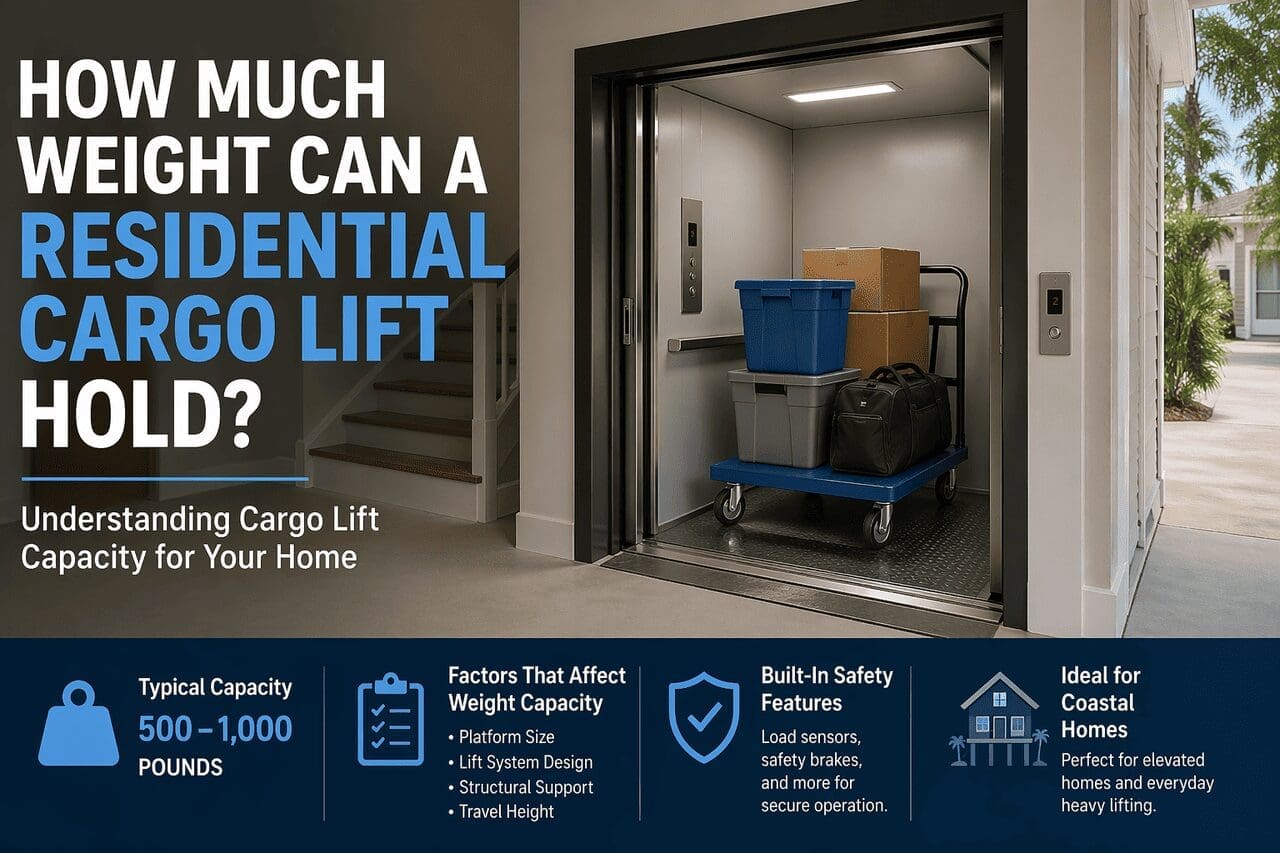
If you are considering installing a cargo lift in your home, one of the most important questions is: how much weight can a residential cargo lift hold?
Understanding cargo lift weight capacity is essential before choosing a system. Whether you are transporting groceries, luggage, tools, or heavy equipment, selecting the right lift ensures safety, efficiency, and long term performance.
Homeowners in Bluffton, Beaufort, Savannah, Hilton Head, and Charleston often install residential cargo lifts to simplify daily tasks in multi level or elevated homes. But not all cargo lifts are the same, and weight capacity plays a major role in determining which system is right for you.
In this guide, we will break down residential cargo lift capacity, what affects it, and how to choose the best option for your needs.
What Is the Typical Weight Capacity of a Cargo Lift?
Most residential cargo lifts are designed to handle between 500 and 1,000 pounds.
However, depending on the system and configuration, some vertical cargo lift systems can handle even more.
Typical capacity ranges include:
- Light duty cargo lifts: 300 to 500 pounds
- Standard residential cargo lifts: 500 to 1,000 pounds
- Heavy duty cargo lifts: 1,000 pounds or more
The right capacity depends on how you plan to use your cargo lift for home applications.
To explore system options, visit our Cargo Lifts page for more details.
What Can You Carry with a Residential Cargo Lift?
A residential cargo lift is designed to handle everyday household items safely and efficiently.
Common items include:
- Groceries and bulk food items
- Coolers and beach gear
- Luggage and suitcases
- Storage bins and boxes
- Tools and maintenance equipment
- Small appliances
For coastal homes in Hilton Head, Bluffton, and Charleston, cargo lifts are especially useful for transporting items from ground level to elevated living spaces.
Factors That Affect Cargo Lift Weight Capacity
Not all cargo lifts have the same lifting ability. Several factors influence how much weight a system can safely handle.
Platform Size
Larger platforms can accommodate more items, but they also require proper weight distribution.
Common cargo lift size in feet includes:
- 3 feet by 3 feet
- 4 feet by 4 feet
- Custom sizes for larger loads
Choosing the right size ensures your lift can handle your typical usage.
Lift System Design
Different systems are built for different levels of performance.
Vertical cargo lift systems are the most common and are designed for reliable, heavy lifting.
Higher quality systems provide:
- Better stability
- Higher weight capacity
- Smoother operation
Structural Support
The structure of your home plays a role in determining capacity.
A professional Installations team will evaluate:
- Load bearing support
- Mounting requirements
- Placement location
This ensures your cargo lift operates safely under load.
Travel Height
The distance the lift needs to travel can also impact capacity.
Longer travel distances may require more powerful systems to maintain safe operation.
Indoor vs Outdoor Installation
Outdoor cargo lifts must handle additional environmental factors such as wind and weather.
Homes in coastal areas like Savannah and Beaufort require systems built to handle humidity and salt air, which can influence system design and durability.
Why Weight Capacity Matters
Choosing the wrong capacity can lead to several problems.
Safety Risks
Overloading a cargo lift can cause system strain or failure. Built in safety features help prevent this, but choosing the right capacity is critical.
Reduced Lifespan
Consistently operating near maximum capacity can wear down components faster, leading to more frequent Repairs & Service.
Limited Functionality
If your lift cannot handle your typical loads, it becomes less useful in everyday situations.
Cargo Lift Safety Features Related to Weight
Modern cargo lifts include safety features designed to manage weight limits.
These include:
- Load sensors that prevent operation if overloaded
- Safety brakes for secure stopping
- Stable platform design for even weight distribution
- Smooth start and stop systems
Regular Maintenance ensures these features continue to function properly.
How to Choose the Right Cargo Lift Capacity
Selecting the right capacity depends on your daily needs.
Ask yourself:
- What items will I move most often?
- How heavy are those items?
- Will multiple items be transported at once?
- Will the lift be used daily or occasionally?
If you are unsure, working with professionals ensures you select the best system.
Our team helps homeowners choose the right cargo lift during the Installations process based on real usage needs.
Cargo Lift vs Elevator Weight Capacity
Some homeowners compare cargo lifts with residential elevators.
Cargo Lifts
- Designed for goods
- Higher load flexibility
- Open platform design
- More practical for heavy items
Residential Elevators
- Designed for passengers
- Typically support around 750 to 1,000 pounds
- Enclosed cab
To learn more about passenger systems, visit our Residential Elevators page.
Maintenance and Long Term Performance
Maintaining your cargo lift is essential for safe operation under load.
Routine Maintenance includes:
- Inspecting load bearing components
- Testing safety systems
- Ensuring proper alignment
If issues arise, prompt Repairs & Service prevent further damage.
For older systems, Modernizations can improve load handling and overall performance.
Ideal Capacity for Coastal Homes
Homes in Bluffton, Beaufort, Savannah, Hilton Head, and Charleston often benefit from higher capacity cargo lifts due to:
- Frequent use
- Heavy items like coolers and gear
- Elevated construction
A system in the 750 to 1,000 pound range is often ideal for these environments.
Common Mistakes to Avoid
When choosing a cargo lift, avoid these common mistakes:
Choosing the Lowest Capacity
Trying to save money by selecting a lower capacity system can limit functionality.
Ignoring Future Needs
Think about long term usage, not just current needs.
Poor Installation
Improper installation can affect performance and safety. Always work with experienced professionals.
Final Thoughts
So, how much weight can a residential cargo lift hold?
Most systems support between 500 and 1,000 pounds, but the right capacity depends on your specific needs, home structure, and usage.
Choosing the correct cargo lift ensures safety, convenience, and long term reliability. Whether you need a system for everyday use or occasional heavy lifting, selecting the right capacity is one of the most important decisions you will make.Homeowners across Bluffton, Beaufort, Savannah, Hilton Head, and Charleston rely on residential cargo lifts to simplify daily life and improve home functionality.