
Signs Your Home Elevator Needs Immediate Repair
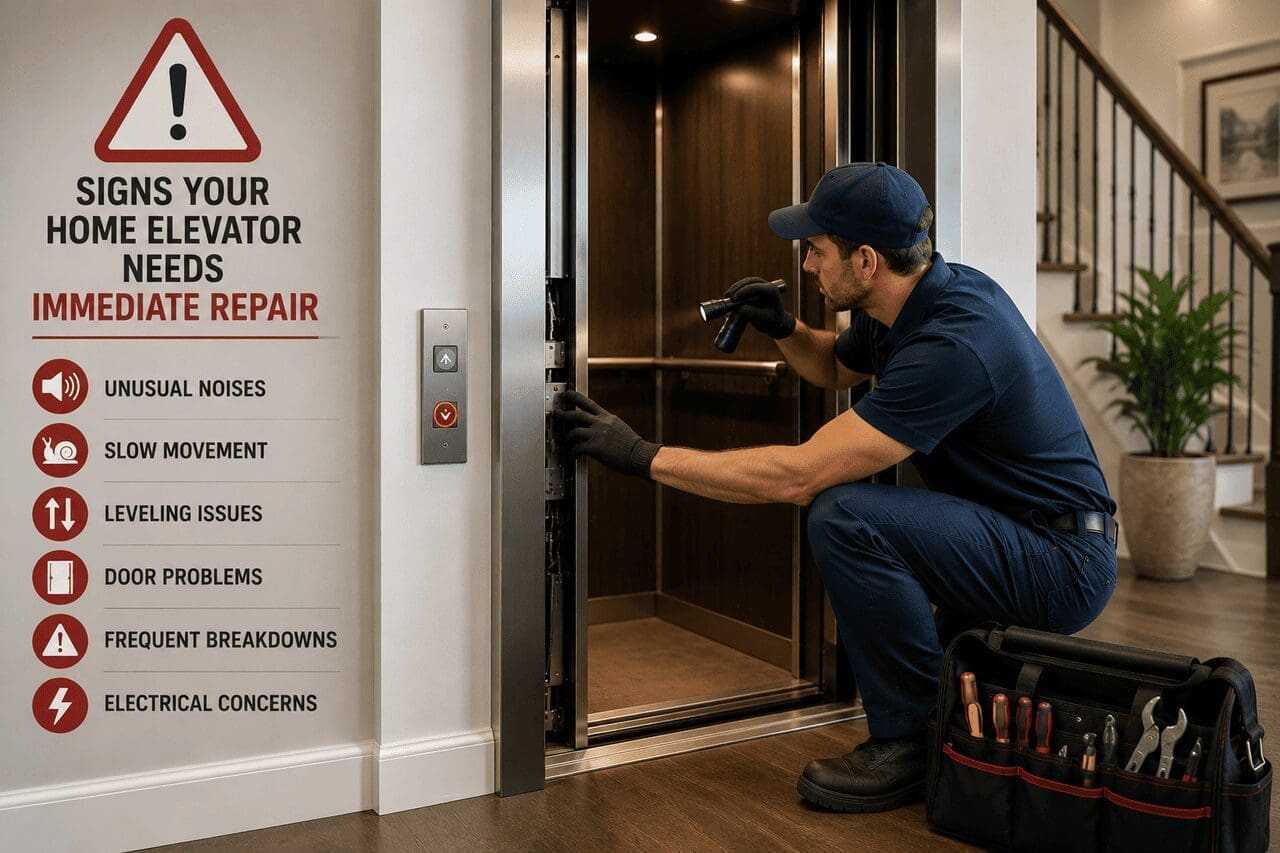
A residential elevator is designed to provide convenience, accessibility, and reliable performance for years. However, like any mechanical system, elevators can develop problems over time. Recognizing early warning signs is critical because delaying repairs can lead to larger mechanical failures, expensive damage, and safety risks.
Many homeowners ignore small issues at first, assuming the system will continue operating normally. Unfortunately, even minor elevator problems can quickly worsen if left unaddressed.
Homeowners in Bluffton, Beaufort, Savannah, Hilton Head, and Charleston rely on professional elevator repair services to keep their systems operating safely and efficiently.
In this guide, we will explain the most common signs your home elevator needs immediate repair and why prompt service matters.
Why Prompt Elevator Repairs Are Important
Residential elevators contain multiple moving and electrical components that work together to provide smooth and safe operation.
When one component begins failing, it can place additional stress on the entire system.
Ignoring warning signs may lead to:
- Unexpected breakdowns
- Expensive repairs
- Safety issues
- Increased wear on components
- Reduced elevator lifespan
Professional Repairs & Service helps identify problems early before they become major issues.
Common Signs Your Home Elevator Needs Repair
1. Unusual Noises During Operation
One of the earliest warning signs is an unusual sound during operation.
Common noises include:
- Grinding
- Squeaking
- Clicking
- Rattling
- Humming
These sounds often indicate:
- Worn components
- Lack of lubrication
- Motor issues
- Pulley or cable problems
A properly functioning elevator should operate relatively quietly and smoothly.
2. Slow Elevator Movement
If your elevator begins moving more slowly than normal, this may indicate a developing mechanical or electrical issue.
Possible causes include:
- Motor wear
- Hydraulic problems
- Electrical system issues
- Drive system strain
Slow operation should never be ignored because it often signals increasing system stress.
3. Jerky or Uneven Movement
Your elevator should move smoothly between floors.
Jerky movement or vibration may indicate:
- Cable wear
- Drive alignment issues
- Rail problems
- Mechanical imbalance
This issue can worsen over time and may eventually affect passenger safety.
4. Elevator Does Not Level Properly
If the elevator stops unevenly above or below floor level, immediate service is important.
Leveling problems can create tripping hazards and often indicate:
- Sensor issues
- Control problems
- Hydraulic concerns
- Mechanical wear
Proper leveling is essential for safe operation.
5. Doors or Gates Not Working Correctly
Elevator doors and gates should open and close smoothly.
Warning signs include:
- Delayed opening
- Sticking doors
- Failure to close completely
- Misalignment
Door issues may involve:
- Sensor malfunctions
- Track wear
- Electrical problems
- Mechanical alignment issues
6. Frequent Breakdowns or Resets
If your elevator repeatedly shuts down or requires resetting, professional repair is necessary.
Frequent interruptions may indicate:
- Control system failure
- Electrical instability
- Overheating components
- Aging equipment
Repeated problems often worsen if left unresolved.
7. Sudden Stops During Operation
An elevator stopping unexpectedly between floors is a serious issue.
Possible causes include:
- Power interruptions
- Faulty safety systems
- Drive malfunctions
- Control failures
Immediate Repairs & Service should be scheduled if this occurs.
8. Burning Smells or Electrical Odors
Electrical smells should never be ignored.
Burning odors may indicate:
- Overheating motors
- Electrical shorts
- Wiring damage
- Component failure
Turn off the system and contact a professional immediately if you notice unusual odors.
9. Visible Rust or Corrosion
For outdoor elevators and coastal homes, corrosion is a major concern.
Salt air and humidity in areas like Hilton Head, Bluffton, Beaufort, Charleston, and Savannah can accelerate deterioration.
Corrosion may affect:
- Metal components
- Electrical systems
- Fasteners
- Rails
- Structural hardware
Routine Maintenance helps identify corrosion before serious damage occurs.
10. Increased Energy Consumption
If your elevator suddenly begins consuming more power, this may indicate system inefficiency.
Possible causes include:
- Aging motors
- Mechanical resistance
- Electrical issues
- Drive system wear
Modernizations may improve energy efficiency for older systems.
Why Coastal Homes Require Extra Attention
Coastal environments create additional stress on residential elevator systems.
Outdoor exposure to:
- Salt air
- Humidity
- Rain
- Wind
can accelerate wear and corrosion.
Homeowners in coastal areas should schedule more frequent inspections to prevent weather-related damage.
How Often Should Home Elevators Be Inspected?
Routine service helps identify problems before they become major repairs.
Most residential elevators should receive professional Maintenance at least once or twice per year.
Homes with:
- Outdoor elevators
- Heavy usage
- Coastal exposure
may require more frequent service.
Common Causes of Residential Elevator Problems
Several factors can contribute to elevator issues.
Aging Components
Over time, normal wear affects motors, cables, pulleys, and controls.
Lack of Maintenance
Neglected systems experience more frequent breakdowns and costly repairs.
Electrical Issues
Power fluctuations and wiring problems can affect elevator performance.
Improper Installation
Poor Installations can create long term operational problems.
Environmental Exposure
Coastal conditions increase corrosion and mechanical wear.
When Should You Consider Elevator Modernization?
If your elevator experiences recurring problems, modernization may be a better long-term solution.
Modernizations can improve:
- Safety
- Ride quality
- Reliability
- Efficiency
- Control systems
Upgrading outdated components often reduces future repair costs.
Benefits of Immediate Elevator Repairs
Addressing problems quickly provides several important benefits.
Improved Safety
Early repairs reduce the risk of accidents and operational failures.
Lower Repair Costs
Small repairs are usually far less expensive than major system failures.
Extended Elevator Lifespan
Timely repairs reduce strain on the system.
Better Performance
Repairs restore smooth, reliable operation.
Choosing the Right Elevator Repair Company
When selecting an elevator repair provider, look for:
- Residential elevator experience
- Coastal environment expertise
- Preventive maintenance services
- Fast response times
- Long term support
Not every elevator company specializes in residential systems.
Serving Homeowners Across Coastal Areas
Homeowners across Bluffton, Beaufort, Savannah, Hilton Head, and Charleston trust professional elevator repair services to keep their systems operating safely and reliably.
Whether your elevator needs emergency repair, routine maintenance, or modernization, experienced professionals can help protect your investment.
Final Thoughts
Your residential elevator should operate smoothly, quietly, and safely. If you notice unusual noises, slow movement, leveling issues, or other warning signs, immediate repair may be necessary.
Addressing problems early helps reduce repair costs, improve safety, and extend the life of your elevator system.
Routine maintenance and professional service ensure your home elevator continues operating reliably for years to come.