
Home Elevator Maintenance Costs: What Homeowners Should Budget For in 2026
Residential elevators are a valuable investment that improve accessibility, convenience, and long-term home value. Like any mechanical system, however, they require routine maintenance to operate safely and reliably. Many homeowners ask the same question after installation: How much does home elevator maintenance cost?
The answer depends on several factors, including the elevator type, age, usage, and whether you choose an annual maintenance plan. While maintenance represents an ongoing ownership expense, it’s typically far less costly than major repairs caused by neglected service.
In this guide, we’ll break down typical home elevator maintenance costs, explain what influences pricing, and show why preventive maintenance is one of the smartest investments homeowners can make.
Why Regular Home Elevator Maintenance Matters
Residential elevators contain hundreds of moving mechanical and electrical components working together every day. Over time, normal wear can affect performance, even if the elevator appears to be operating normally.
Routine maintenance helps:
- Keep passengers safe.
- Identify worn parts before they fail.
- Reduce unexpected breakdowns.
- Improve ride quality.
- Extend the life of the elevator.
- Protect your investment.
Skipping scheduled maintenance may save money in the short term, but it often leads to more expensive repairs later.
How Much Does Home Elevator Maintenance Cost?
Maintenance costs vary depending on your location, elevator manufacturer, and service provider. In general, homeowners can expect to budget for routine inspections and preventive service at least once each year.
Factors that influence pricing include:
- Elevator type.
- Number of floors served.
- Age of the equipment.
- Frequency of use.
- Local labor rates.
- Service agreement coverage.
- Replacement parts, if needed.
Rather than focusing solely on the cost of an individual service visit, homeowners should consider the long-term value of keeping the elevator in excellent operating condition.
Many elevator companies offer annual maintenance plans that include scheduled inspections and discounted repair services, helping homeowners better manage ongoing ownership costs.
What Factors Affect Maintenance Costs?
Not every residential elevator requires the same level of service. Several variables influence the amount of maintenance needed over time.
Elevator Drive System
Hydraulic elevators, winding drum elevators, pneumatic elevators, and machine-room-less systems all have different maintenance requirements.
Some systems require periodic fluid inspections, while others focus more on cables, belts, or drive components.
Elevator Age
Newer elevators generally require fewer repairs because components are still in excellent condition.
As elevators age, parts naturally experience wear, increasing the likelihood of adjustments or replacements during service visits.
Frequency of Use
An elevator used several times each day experiences more wear than one used only occasionally.
Homes with multiple family members, caregivers, or frequent guests may benefit from more frequent maintenance inspections.
Coastal Environments
For homes near the South Carolina or Georgia coast, humidity and salt air can accelerate corrosion on certain metal components.
Routine inspections help identify environmental wear before it affects performance.
Manufacturer Recommendations
Every manufacturer publishes maintenance recommendations based on the design of its equipment.
Following these service intervals helps maximize reliability and preserve long-term performance.
What’s Included During a Maintenance Visit?
A preventive maintenance appointment involves much more than simply checking whether the elevator moves between floors.
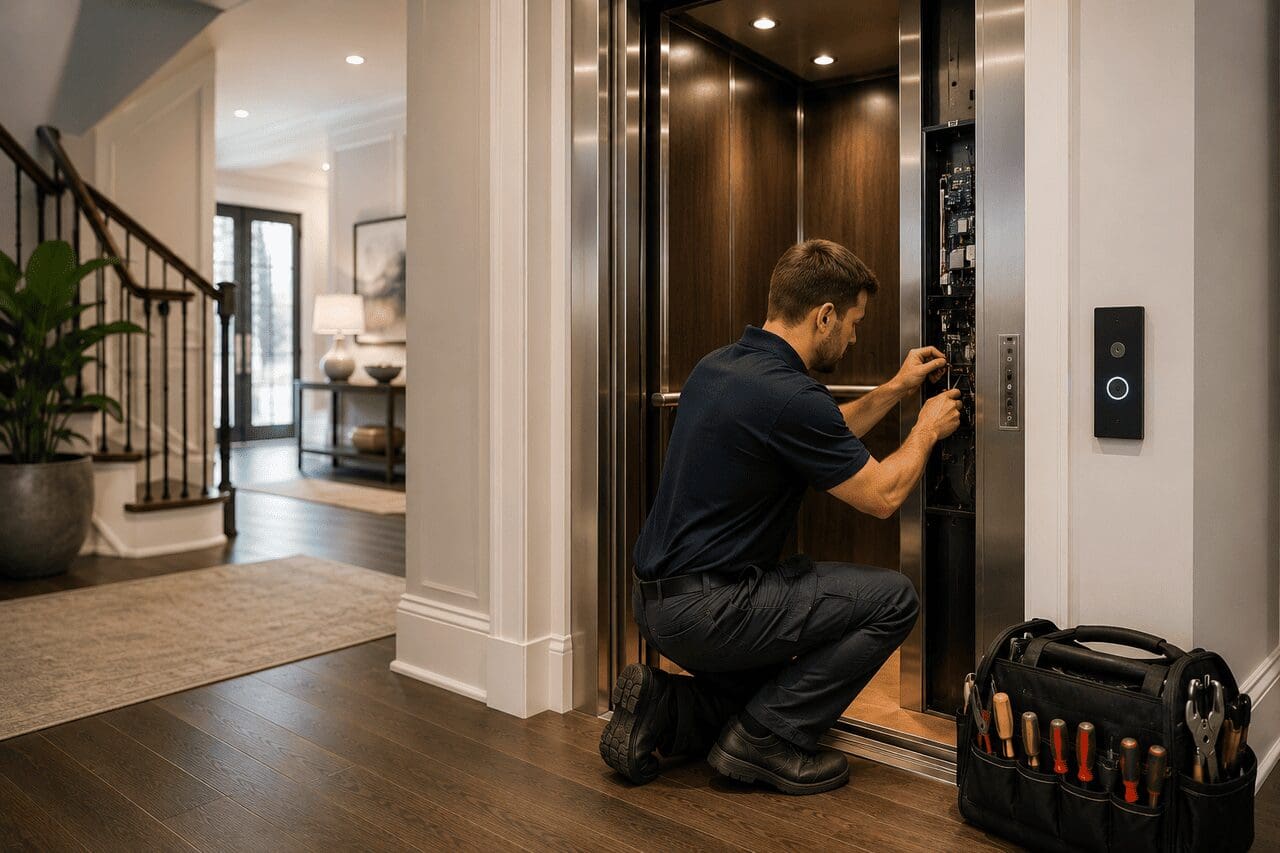
Experienced technicians perform a detailed inspection of critical components, including:
- Door operation.
- Door interlocks.
- Guide rails.
- Drive systems.
- Battery backup systems.
- Emergency lighting.
- Alarm functions.
- Cab controls.
- Safety brakes.
- Electrical wiring.
- Lubrication of moving components.
- Ride quality and leveling accuracy.
Technicians also look for early signs of wear that could eventually lead to equipment failure if left unaddressed.
Routine maintenance allows many small issues to be corrected before they become major repairs.
Annual Maintenance Plans vs. Paying Per Visit
Many homeowners choose an annual maintenance agreement rather than scheduling service only when something goes wrong.
Maintenance plans typically offer several advantages.
Predictable Costs
Instead of worrying about unexpected service expenses, homeowners know routine maintenance has already been scheduled.
Priority Scheduling
Some service providers give maintenance agreement customers priority when scheduling repairs or emergency service.
Early Problem Detection
Regular inspections often catch worn components before they cause unexpected breakdowns.
Better Long-Term Value
Preventive maintenance generally costs significantly less than replacing major elevator components after a failure.
For homeowners planning to remain in their homes for many years, an annual maintenance plan often provides greater value than waiting until repairs become necessary.
Repair Costs vs. Preventive Maintenance
One of the biggest misconceptions homeowners have is that skipping routine maintenance saves money. While avoiding an annual service visit may reduce short-term expenses, it can significantly increase the likelihood of costly repairs later.
Preventive maintenance allows technicians to identify worn or aging components before they fail. Replacing a small part during a scheduled visit is often far less expensive than repairing damage caused by an unexpected breakdown.
Routine maintenance can help prevent issues such as:
- Worn door rollers.
- Misaligned door interlocks.
- Loose electrical connections.
- Low hydraulic fluid levels (where applicable).
- Battery backup failures.
- Excessive wear on drive components.
- Poor cab leveling.
- Noisy operation.
Addressing these concerns early helps minimize downtime while protecting the overall condition of the elevator.
How to Reduce Long-Term Home Elevator Maintenance Costs
Although maintenance is an ongoing responsibility, homeowners can take several steps to help keep long-term costs under control.
Schedule Maintenance Every Year
Following your manufacturer’s recommended maintenance schedule is one of the most effective ways to reduce future repair costs.
Regular inspections allow technicians to identify developing problems before they become expensive repairs.
Avoid Overloading the Elevator
Every residential elevator has a maximum weight capacity.
Repeatedly exceeding that limit places unnecessary stress on the drive system, doors, and safety components, increasing wear over time.
Always follow the manufacturer’s weight recommendations.
Keep the Elevator Clean
Dust, dirt, and debris can interfere with moving components and door tracks.
Regular cleaning of the cab and surrounding landing areas helps reduce unnecessary wear while keeping the elevator looking its best.
Avoid allowing liquids to enter control panels or electrical components during cleaning.
Listen for Unusual Changes
Your elevator should operate smoothly and quietly.
If you notice new sounds, vibrations, slower travel, or inconsistent stopping between floors, schedule a service appointment promptly.
Small problems are usually less expensive to repair than major component failures.
Protect Equipment During Severe Weather
For homeowners in coastal South Carolina and Georgia, hurricanes, flooding, and excessive humidity can affect elevator equipment.
After severe weather, inspect the surrounding area for signs of water intrusion and contact your elevator service provider if you suspect moisture has reached electrical or mechanical components.
Signs It’s Time to Schedule Service
Even if your next annual maintenance appointment is months away, certain warning signs should never be ignored.
Schedule professional service if you notice:
- The elevator moves more slowly than usual.
- The cab stops above or below floor level.
- Doors hesitate before opening or closing.
- Grinding, squeaking, or rattling noises.
- Rough or jerky movement.
- Error messages on the control panel.
- Flickering cab lights.
- Frequent resets after power outages.
- Battery backup warning indicators.
Prompt service often prevents additional damage while helping restore safe, reliable operation.
Choosing the Right Elevator Maintenance Company
Not every service provider specializes in residential elevators.
When selecting a maintenance company, consider:
- Experience with residential elevator systems.
- Factory-trained technicians.
- Familiarity with your elevator manufacturer.
- Preventive maintenance programs.
- Emergency service availability.
- Positive customer reviews.
- Clear communication and transparent pricing.
Working with an experienced residential elevator company provides peace of mind that your equipment is receiving the proper care throughout its lifespan.
Frequently Asked Questions
How often should a residential elevator be serviced?
Most manufacturers recommend annual preventive maintenance. Elevators with heavier daily use or those installed in coastal environments may benefit from more frequent inspections.
Is a maintenance agreement worth it?
For many homeowners, yes. Maintenance agreements help ensure routine service is performed on schedule, may include discounted repair rates, and can provide priority scheduling if service is needed.
Can skipping maintenance void my warranty?
Some manufacturers require routine maintenance to maintain warranty coverage. Review your warranty documentation and follow the recommended service schedule.
What happens during a maintenance inspection?
Technicians inspect safety systems, door operation, electrical components, drive equipment, emergency features, battery backup systems, and overall ride quality while making adjustments as needed.
Can maintenance prevent every repair?
No. Mechanical systems naturally experience wear over time. However, routine maintenance significantly reduces the risk of unexpected breakdowns and helps identify problems before they become major repairs.
Final Thoughts
Owning a residential elevator involves more than the initial installation. Planning for routine maintenance helps protect your investment, improves passenger safety, and reduces the likelihood of unexpected repair costs.
While maintenance expenses vary depending on your elevator system and usage, regular inspections are typically one of the most cost-effective ways to extend equipment life and maintain dependable performance.
By partnering with an experienced residential elevator company and following the manufacturer’s recommended maintenance schedule, homeowners can enjoy years of smooth, reliable operation while minimizing long-term ownership costs.