
How Salt Air and Humidity Affect Home Elevators in Coastal Communities
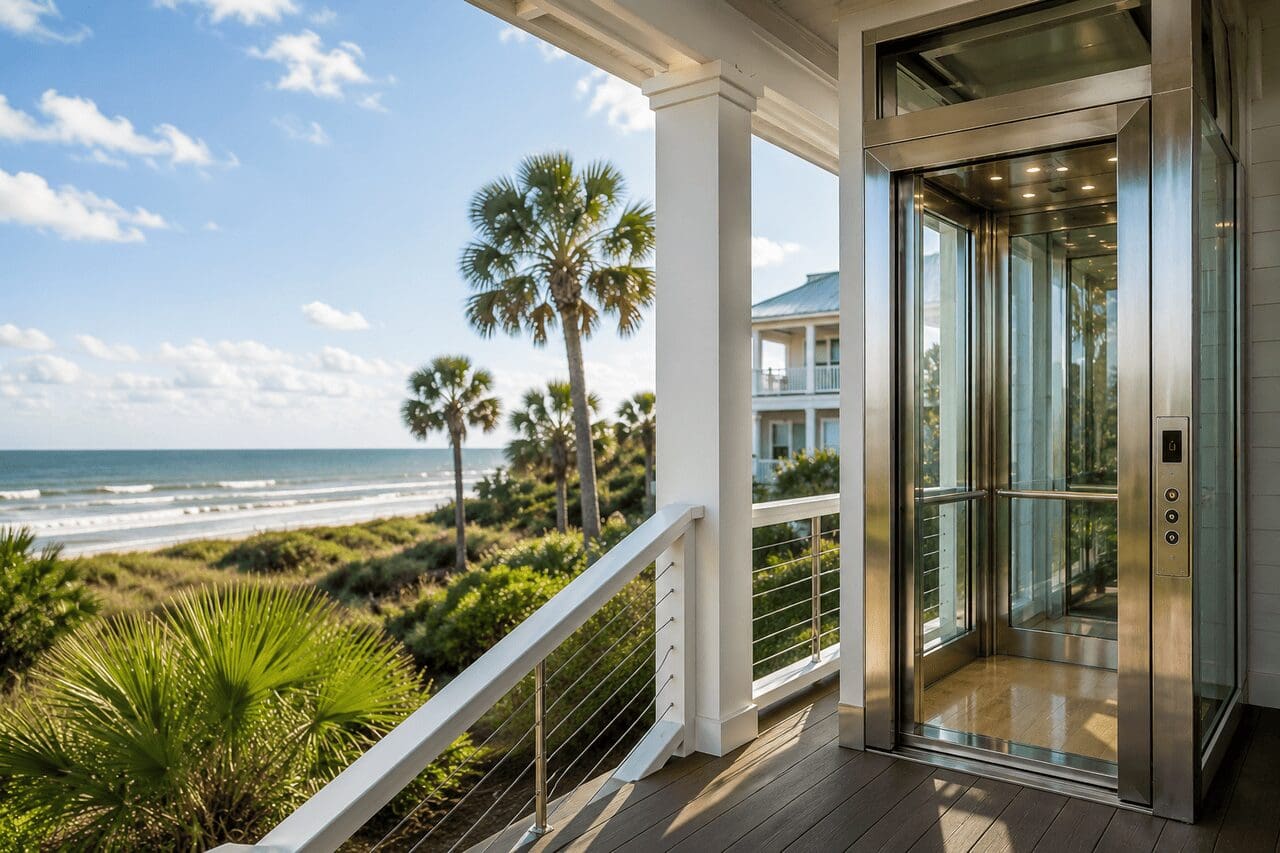
Living along the coast offers incredible views, ocean breezes, and a relaxed lifestyle, but coastal conditions can be challenging for mechanical equipment around the home. Residential elevators are no exception.
For homeowners in coastal communities throughout South Carolina and Georgia, salt air, high humidity, wind-driven moisture, and seasonal storms can contribute to accelerated wear if an elevator isn’t properly installed and maintained.
Understanding how the coastal environment affects your home elevator can help you protect your investment, reduce unexpected repairs, and keep the system operating reliably for years to come.
Why Coastal Conditions Matter for Residential Elevators
A residential elevator combines mechanical, electrical, and safety components that must work together consistently. Coastal environments can place additional stress on these systems compared with homes farther inland.
The primary concerns include:
- Salt carried through the air
- Persistent high humidity
- Moisture exposure
- Corrosion
- Severe coastal weather
- Long periods of inactivity in seasonal homes
These conditions don’t necessarily mean a home elevator will have a shorter lifespan. They do, however, make proper equipment selection and preventive maintenance particularly important.
How Salt Air Can Affect Elevator Components
Salt is one of the biggest environmental considerations for equipment installed near the coast.
Tiny salt particles carried by coastal air can settle on exposed metal surfaces. Over time, the combination of salt and moisture can encourage corrosion.
Depending on the elevator’s design and location, potentially affected areas may include:
- Metal fasteners and brackets
- Door hardware
- Electrical connections
- Exterior fixtures
- Landing equipment
- Structural components
- Outdoor elevator equipment
Exterior elevators and lifts generally experience greater environmental exposure than systems installed completely inside a conditioned home.
Regular inspections give technicians an opportunity to identify early signs of deterioration before they develop into larger problems.
High Humidity Creates Additional Challenges
Humidity is another major factor in coastal South Carolina and Georgia.
Elevator equipment contains electrical and mechanical components that perform best when environmental conditions are properly managed. Persistent moisture can contribute to corrosion, affect electrical connections, and accelerate deterioration of certain materials.
This is especially important when elevator equipment is located in:
- Garages
- Exterior shafts
- Unconditioned spaces
- Ground-level areas
- Outdoor enclosures
The location and design of the elevator should therefore be considered carefully during the planning stage.
Indoor vs. Outdoor Elevator Exposure
Not every coastal elevator experiences the same environmental conditions.
An elevator installed completely inside a climate-controlled residence generally receives considerably less direct exposure to salt air and moisture than an exterior system.
Outdoor elevators, platform lifts, and cargo lifts require additional consideration because equipment may be exposed directly or indirectly to the elements.
Homeowners considering an outdoor system should discuss factors such as equipment placement, enclosure design, weather exposure, drainage, and appropriate materials with an experienced elevator professional.
Elevated Coastal Homes Have Unique Requirements
Many homes along the South Carolina and Georgia coasts are built on elevated foundations. This is particularly common in beach, island, and flood-prone communities.
Elevated construction makes elevators and lifts extremely useful because homeowners may need to travel several levels simply to reach the primary living area.
A residential elevator can make everyday activities easier, including:
- Bringing groceries into the home
- Moving luggage between floors
- Accommodating family members with mobility limitations
- Providing convenient access for older homeowners
- Making multi-story living more practical
Cargo lifts can also be useful for moving household items, beach equipment, coolers, and supplies to elevated living levels.
However, the location of equipment in an elevated coastal home should be carefully planned with environmental exposure in mind.
Why Preventive Elevator Maintenance Is Especially Important Near the Coast
Preventive maintenance is important for every residential elevator, but coastal properties deserve particular attention.
During routine service, an experienced elevator technician can inspect the system for signs of wear, corrosion, moisture-related deterioration, and other developing concerns.
Preventive maintenance can help:
- Identify corrosion early
- Detect worn components
- Verify safety systems
- Maintain smooth operation
- Reduce the risk of unexpected breakdowns
- Extend the useful life of equipment
Addressing a small issue during routine service is often easier than waiting until it affects elevator operation.
Don’t Ignore Early Signs of Corrosion
Visible corrosion shouldn’t automatically be considered a cosmetic issue.
If you notice rust, discoloration, deterioration around hardware, or other unusual changes, have the equipment professionally inspected.
Other warning signs worth investigating include:
- Unusual noises
- Rough or inconsistent movement
- Doors that don’t operate normally
- Intermittent operation
- Unusual vibration
- Changes in ride quality
Homeowners should avoid attempting to repair or adjust elevator components themselves. Residential elevators contain specialized safety and electrical systems that should be serviced by qualified professionals.
Vacation and Second Homes Need Attention Too
Coastal communities such as Kiawah Island, Seabrook Island, Fripp Island, Edisto Beach, and St. Simons Island include many vacation and second homes.
A residential elevator in a seasonal property may sit unused for extended periods. That doesn’t eliminate the need for maintenance.
In fact, periodic professional inspection can be especially useful for properties that aren’t occupied continuously. A homeowner doesn’t want to arrive for a vacation only to discover that the elevator isn’t operating correctly.
Before extended periods of occupancy, consider scheduling service so potential problems can be identified ahead of time.
Protecting Your Elevator During Severe Coastal Weather
Hurricanes and tropical storms are another reality of coastal living.
Homeowners should follow the elevator manufacturer’s recommendations and instructions from their elevator service provider when preparing for severe weather.
After a significant storm, don’t operate an elevator that may have been exposed to flooding, water intrusion, or electrical damage until it has been professionally evaluated.
If there is any uncertainty about the condition of the system, schedule an inspection before returning it to normal operation.
Choosing an Elevator for a Coastal Home
If you’re planning a residential elevator for a new coastal home, environmental conditions should be part of the conversation from the beginning.
Considerations may include:
- Indoor versus exterior installation
- Elevator location
- Exposure to wind-driven rain
- Humidity
- Equipment placement
- Material selection
- Accessibility goals
- Maintenance requirements
- Future aging-in-place needs
Working with an elevator company experienced in coastal properties can help you select a system appropriate for your home’s design and location.
Professional Service Makes a Difference
Coastal residential elevators require more than simply responding when something stops working. A proactive maintenance strategy can help homeowners protect equipment and maintain dependable operation.
Elevator-Lift Systems, Inc. has served homeowners throughout coastal South Carolina and Georgia for more than 40 years. Our team provides residential elevator installation, preventive maintenance, repairs, inspections, and modernization, along with platform lifts, cargo lifts, and stairlifts.
Whether you own a permanent residence, luxury coastal home, beach house, or seasonal property, our experienced team can help you select and maintain an accessibility solution suited to your home.
Schedule Your Residential Elevator Service
Salt air and humidity are part of coastal living, but they don’t have to become unnecessary problems for your residential elevator.
Proper planning, routine inspections, and preventive maintenance can help identify developing concerns early and support reliable operation throughout the life of your system.
Contact Elevator-Lift Systems, Inc. today to schedule residential elevator maintenance, repair, or an on-site consultation for your coastal home.