
Residential Elevator Maintenance for Vacation and Second Homes: What Owners Should Know
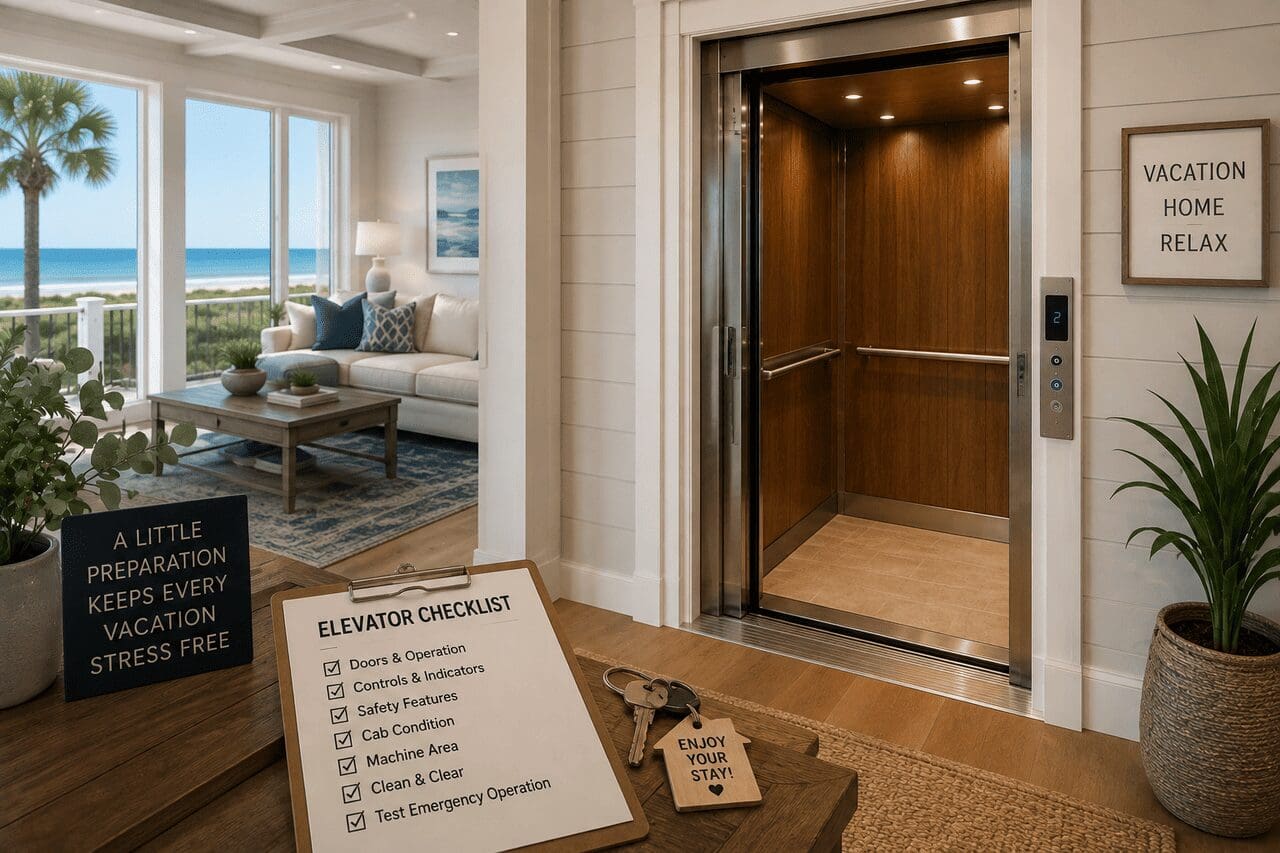
Owning a vacation or second home along the South Carolina or Georgia coast offers a place to relax, entertain family, and enjoy time away from everyday routines. But when a property sits unoccupied for weeks or months at a time, maintaining its mechanical systems requires a little extra planning.
That includes the residential elevator.
An elevator in a seasonal home may receive less daily use than one in a primary residence, but that doesn’t mean maintenance becomes less important. Coastal conditions, extended periods of inactivity, power interruptions, and unnoticed equipment issues can all affect how reliably the system operates when you return.
A proactive maintenance plan can help protect your elevator and reduce the likelihood of discovering a problem at the beginning of your vacation.
Why Seasonal Homes Require a Different Maintenance Mindset
It’s easy to assume that an elevator used only occasionally experiences less wear and therefore needs less attention.
Usage is only one factor.
A residential elevator contains mechanical, electrical, and safety components that remain in the home even when nobody is using the system.
For coastal vacation properties, additional considerations can include:
- High humidity
- Salt air
- Extended periods without operation
- Power outages
- Severe weather
- Temperature changes in unconditioned spaces
- Moisture exposure
Regular professional service allows these conditions to be monitored before they contribute to larger problems.
Does an Elevator Still Need Maintenance If It Isn’t Used Often?
Yes.
Limited use doesn’t eliminate the need for routine inspection and preventive maintenance.
During a service visit, a qualified technician can evaluate the condition and operation of the elevator and identify signs of wear or deterioration.
Depending on the system, service may include checking areas such as:
- Door operation
- Controls
- Safety devices
- Electrical connections
- Mechanical components
- Ride performance
- Equipment condition
The exact maintenance requirements depend on the elevator manufacturer, model, installation, and operating environment.
Follow the manufacturer’s recommendations and the maintenance schedule established by your elevator service provider.
Coastal Conditions Don’t Stop When You Leave
A second home may be empty, but the coastal environment remains active year-round.
Salt carried through the air and persistent humidity can contribute to corrosion and deterioration, particularly when elevator equipment is located in exterior or unconditioned areas.
Potentially vulnerable components can include metal hardware, electrical connections, landing equipment, and other exposed materials.
This is one reason preventive maintenance is particularly valuable for homes in coastal communities.
A developing issue can be identified during a scheduled inspection rather than remaining unnoticed until the homeowner returns months later.
Schedule Service Before Peak Occupancy
If you know when you’ll be returning to your vacation home, consider arranging elevator service before an extended stay or busy season.
This can be especially helpful before:
- Summer vacations
- Holiday gatherings
- Family reunions
- Extended seasonal stays
- Rental periods
The goal is simple: make sure the elevator is operating properly before the house fills with family or guests.
For properties managed by a caretaker or property-management company, coordinating access for an elevator technician can make this process easier.
What to Check When Returning to Your Second Home
When you return after an extended absence, pay attention to how the elevator looks and operates.
Before regular use, watch for anything unusual, including:
- Unexpected noises
- Rough movement
- Doors behaving differently
- Unusual vibration
- Visible corrosion
- Moisture near elevator equipment
- Damage around entrances
- Error indicators
- Unusual odors
If something doesn’t seem normal, avoid repeatedly operating the system in an attempt to make the issue disappear.
Contact an experienced residential elevator technician for an inspection.
Don’t Attempt DIY Elevator Maintenance
Homeowners can visually observe their elevator and keep surrounding areas clean, but internal maintenance and repairs should be left to qualified professionals.
Residential elevators contain specialized mechanical, electrical, and safety systems.
Attempting to adjust, bypass, lubricate, or repair components without proper training can create additional problems and potentially compromise safety.
If your elevator isn’t operating correctly, professional diagnosis is the appropriate next step.
Pay Special Attention After Major Storms
Vacation homes along the coast may experience tropical storms, hurricanes, heavy rain, or flooding while owners are away.
If a significant weather event occurred during your absence, inspect the property before returning the elevator to normal use.
If elevator equipment may have been exposed to:
- Floodwater
- Water intrusion
- Wind-driven rain
- Electrical surges
- Structural damage
do not assume the system is safe to operate simply because it powers on.
Have it professionally evaluated when there is any reason to suspect damage.
Power Outages Can Affect Vacation Properties
Second homes may experience power interruptions without the owner being present.
Homeowners should understand how their particular elevator responds to a loss of power and what emergency or backup features are included.
Ask your elevator provider about:
- Battery backup
- Emergency lowering
- Manual procedures intended for authorized personnel
- What happens when power returns
- When professional service should be requested
Keep your elevator company’s contact information readily available for anyone responsible for the property.
Coordinate With Your Property Manager or Caretaker
If someone watches your home while you’re away, make elevator awareness part of the property-management routine.
They don’t need to perform maintenance.
However, they can watch for obvious warning signs such as:
- Water intrusion
- Unusual sounds
- Error messages
- Visible damage
- Doors left open
- Power-related problems
Make sure they know whom to contact rather than attempting repairs themselves.
This can be particularly useful for homes that remain vacant for long periods.
Vacation Rentals Require Additional Planning
If your coastal property is occasionally rented to guests, dependable elevator operation becomes even more important.
Guests may be unfamiliar with the equipment and may use it differently from the homeowner.
Clear operating instructions can help prevent confusion.
Property owners should also make sure guests understand whether a particular lift is intended for passengers or cargo.
A residential cargo lift, for example, is designed to transport goods not people.
Keeping this distinction clear is important for proper equipment use.
Cargo Lifts Need Maintenance Too
Many elevated vacation homes include cargo lifts for moving groceries, luggage, beach equipment, coolers, and household supplies.
Like other mechanical equipment, cargo lifts require appropriate inspection and maintenance.
Coastal exposure can be particularly relevant because cargo lifts are often installed in areas more exposed to outdoor conditions than interior passenger elevators.
If your property includes both a residential elevator and cargo lift, discuss maintenance needs for each system with your service provider.
Exterior Equipment Deserves Extra Attention
Elevators and lifts located inside climate-controlled homes generally receive greater protection from coastal conditions than exterior equipment.
Outdoor or partially exposed systems may encounter:
- Salt air
- Rain
- Humidity
- Wind
- Temperature changes
- Debris
Equipment selection, installation location, enclosure design, and routine maintenance all become especially important.
If you’re planning a new elevator or lift for a vacation property, discuss environmental exposure before choosing the equipment.
Keep the Area Around Elevator Equipment Clear
When preparing a vacation home for an extended absence, avoid using elevator equipment areas as general storage spaces.
Keep required access areas clear for technicians and avoid placing household items where they could interfere with equipment or service access.
Your elevator provider can explain which areas need to remain unobstructed for your particular installation.
Maintain Service Records
Keeping organized maintenance records is useful for any homeowner, but it can be especially valuable for a second property.
Maintain records of:
- Routine maintenance
- Repairs
- Inspections
- Parts replaced
- Modernization work
- Manufacturer information
- Warranty documentation
If the home changes property managers or is eventually sold, having a clear service history can make it easier to understand how the elevator has been maintained.
Know When an Older Elevator May Need Modernization
Routine maintenance can help extend the useful life of an elevator, but older systems may eventually require upgrades.
Modernization may be worth discussing if:
- Replacement parts are becoming difficult to obtain
- Breakdowns are becoming more frequent
- Ride quality has changed
- Controls or components are outdated
- Safety-related equipment needs updating
A professional evaluation can help determine whether repair, component replacement, or modernization is appropriate.
Maintenance for Kiawah, Seabrook, Fripp, Edisto and Other Coastal Communities
Second homes and vacation properties are common throughout coastal South Carolina and Georgia, including communities such as Kiawah Island, Seabrook Island, Fripp Island, Edisto Beach, St. Simons Island, Savannah, and surrounding areas.
Although every property is different, coastal homeowners share one important consideration: environmental exposure doesn’t take a vacation when they do.
Establishing a consistent maintenance relationship with a company familiar with residential elevators and coastal properties can help protect your equipment whether you’re at the property every day or only several times a year.
Make Elevator Maintenance Part of Your Second-Home Checklist
Preparing a vacation home isn’t just about landscaping, HVAC service, storm preparation, and general property maintenance.
Your residential elevator deserves a place on that checklist too.
Regular preventive maintenance, professional inspections, attention after severe weather, and timely repairs can help ensure your elevator is ready when you arrive.
Elevator-Lift Systems, Inc. has served homeowners throughout coastal South Carolina and Georgia for more than 40 years. We provide residential elevator maintenance, repairs, modernization, installation, and service for many major residential elevator brands.
Contact Elevator-Lift Systems, Inc. to schedule residential elevator service for your vacation or second home.