
Buying a Coastal Home With an Existing Elevator? What to Check Before Closing
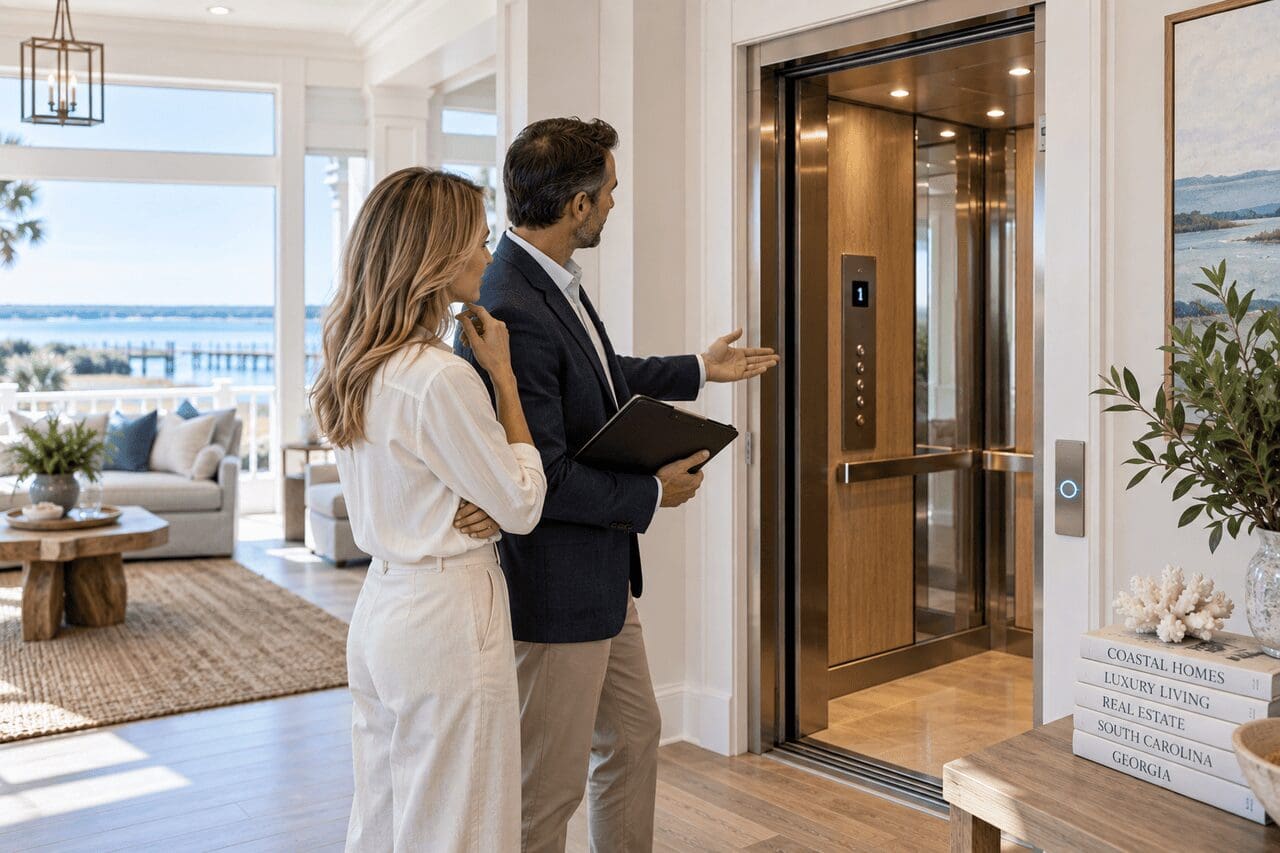
Buying a coastal home with a residential elevator can be an attractive opportunity. An elevator can make a multi-story property more convenient, improve accessibility, support aging in place, and make it easier to move between elevated living levels.
However, an existing home elevator should also be evaluated as part of the purchasing process.
Just as buyers investigate the roof, HVAC system, plumbing, electrical system, foundation, and other major components of a property, they should understand the condition of the residential elevator they may soon own.
This is especially important when purchasing a home along the South Carolina or Georgia coast. Humidity, salt-laden air, moisture, seasonal occupancy, and severe weather can create additional considerations for mechanical equipment.
A general home inspection may identify obvious concerns around the property, but residential elevators are specialized systems. If you are serious about purchasing a home with an elevator, having the equipment evaluated by a qualified elevator professional can provide information that may not be available from a standard home inspection.
Here are some of the most important things to investigate before closing.
Why an Existing Home Elevator Deserves Attention Before You Buy
A residential elevator can remain part of a home for many years.
That means a buyer may be acquiring not only the elevator itself but also its maintenance history, previous repairs, aging components, discontinued equipment, and any problems that have developed over time.
An elevator that looks attractive from inside the cab is not necessarily in excellent mechanical condition.
Likewise, an older elevator is not automatically a problem. Properly maintained equipment may continue providing dependable service for years, while poorly maintained equipment can develop problems much sooner.
The goal of a home elevator inspection before buying a house is to better understand what you are acquiring.
Before closing, buyers should try to determine:
- Who manufactured the elevator?
- Approximately how old is it?
- Has it been regularly maintained?
- Who has been servicing it?
- Are maintenance records available?
- Has it required significant repairs?
- Are replacement parts still available?
- Does it currently operate properly?
- Are there signs of moisture or corrosion?
- Could modernization be needed in the foreseeable future?
The answers can help you understand both the current condition of the elevator and potential ownership considerations after closing.
1. Identify the Elevator Manufacturer
Start by determining who manufactured the elevator.
Residential elevators are available from numerous manufacturers, and equipment design varies considerably between brands and models.
Elevator-Lift Systems, Inc. works with equipment from manufacturers such as Savaria, Waupaca, Inclinator, Harmar, ThyssenKrupp, National Wheel-O-Vator, CEMCO, and others.
Knowing the manufacturer can help an elevator professional determine what equipment is installed, what service requirements may apply, and whether replacement components remain readily available.
Do not rely solely on the appearance of the elevator cab.
Interior panels, flooring, lighting, and other finishes may have been changed during renovations. Identifying the actual equipment is more useful than judging the elevator by its interior appearance.
2. Find Out How Old the Home Elevator Is
Ask the seller when the elevator was installed.
If the seller does not know, installation records, maintenance documents, equipment information, permits, or a professional evaluation may provide additional clues.
Age by itself does not determine whether an elevator should be replaced.
A well-maintained older elevator may remain serviceable, while a newer system that has been neglected or exposed to unfavorable conditions may require attention.
However, age provides useful context.
As equipment becomes older, buyers may need to think more carefully about:
- Parts availability
- Control-system condition
- Door and gate components
- Electrical equipment
- Wear-related repairs
- Manufacturer support
- Potential modernization
Knowing the approximate installation date can help establish realistic expectations.
3. Ask for the Elevator’s Maintenance Records
Maintenance history is one of the most valuable things a buyer can request.
Ideally, the seller should be able to provide records showing when the elevator was serviced and what work was performed.
Look for information such as:
- Preventive maintenance visits
- Repairs
- Replacement components
- Service calls
- Modernization work
- Previous inspections
- Recurring problems
A consistent maintenance history can help demonstrate how the equipment has been cared for.
Missing records do not automatically mean the elevator is in poor condition, but they create additional uncertainty.
If little or no maintenance documentation is available, a professional evaluation becomes even more valuable.
4. Determine Who Has Been Servicing the Elevator
Ask which elevator company currently maintains the system.
This can help you understand whether the equipment has been receiving professional service and may also make it easier to obtain information about previous work, subject to applicable authorization and record availability.
After purchasing the home, you will also need a company capable of maintaining and repairing the equipment.
That is an important consideration when evaluating an existing residential elevator.
A system is much more useful when qualified local service is available for the manufacturer and model.
5. Do Not Rely Only on a Standard Home Inspection
A home inspection is an important part of purchasing a property, but an elevator is specialized mechanical and electrical equipment.
A general home inspector may note obvious conditions, but buyers should not assume that a standard inspection includes a detailed assessment of residential elevator components.
A qualified elevator technician has experience with elevator-specific systems, operation, controls, doors, gates, mechanical equipment, and other components.
If the elevator is an important part of your decision to purchase the home, consider arranging a dedicated professional evaluation.
This is particularly worthwhile when the elevator is older, has an uncertain service history, or shows signs of operational problems.
6. Operate the Elevator and Pay Attention to How It Feels
When appropriate and when the equipment is believed to be in normal operating condition, pay attention to how the elevator behaves.
The ride should feel reasonably consistent for the type of equipment installed.
Potential warning signs can include:
- Unusual noises
- Excessive vibration
- Rough starts or stops
- Delayed operation
- Inconsistent movement
- Unexpected stopping
- Difficulty reaching a floor
- Unusual odors
Do not attempt to diagnose these symptoms yourself.
They simply indicate that professional evaluation may be warranted.
Different elevator systems can sound and feel different during normal operation, so a buyer should not assume every noise indicates a serious defect.
The technician’s job is to determine whether operation is normal for that equipment.
7. Check How the Elevator Levels at Each Floor
When the elevator arrives at a landing, the cab floor should align appropriately with the landing.
If the elevator consistently stops noticeably above or below the finished floor, it deserves professional attention.
Poor leveling can make entering and exiting the elevator more difficult, particularly for older adults or people using mobility devices.
It may also indicate that the system needs adjustment, service, or further evaluation.
Test each landing rather than assuming that proper operation at one floor means every stop functions identically.
8. Look at the Doors and Gates
Doors and gates are among the most noticeable parts of a residential elevator and play an important role in proper operation.
During your evaluation, pay attention to whether doors and gates:
- Open and close properly
- Align correctly
- Move smoothly
- Show obvious physical damage
- Behave consistently at each landing
Do not attempt to bypass, adjust, defeat, or manipulate elevator safety devices to test the system.
If something does not operate normally, have a qualified professional inspect it.
9. Look for Signs of Coastal Corrosion
This deserves particular attention when buying a coastal property.
Salt-laden air, moisture, and humidity can contribute to corrosion of metals and deterioration of mechanical or electrical components.
The degree of exposure varies dramatically depending on the property.
A home directly exposed to ocean air may experience different conditions than a residence several miles inland. Equipment location also matters. Protected interior equipment may experience much less exposure than components located near exterior openings or humid lower levels.
Visible rust or corrosion should not automatically be interpreted as catastrophic damage, but it should not be ignored.
A technician can determine whether corrosion is cosmetic, maintenance-related, or affecting components that require attention.
10. Investigate Any History of Flooding or Water Intrusion
When purchasing a coastal home, ask whether the property has experienced flooding or significant water intrusion.
Then consider where the elevator equipment is located relative to those areas.
This is particularly important in elevated homes where portions of the elevator system may extend toward a garage or lower level.
Water exposure can affect electrical and mechanical components, and saltwater can accelerate corrosion.
If there is evidence that elevator equipment has previously been exposed to floodwater, professional evaluation is strongly recommended.
Do not enter elevator pits, equipment spaces, or other restricted areas yourself to investigate.
11. Consider the Home’s Storm History
Coastal South Carolina and Georgia periodically experience hurricanes, tropical storms, heavy rain, storm surge, and extended electrical outages.
Ask whether major storms have affected the property and whether the elevator required repairs afterward.
Useful questions include:
- Has water ever reached elevator equipment?
- Has the elevator been repaired following a hurricane?
- Were electrical components replaced after a storm?
- Has the home experienced significant power-related damage?
- Are there records of post-storm elevator service?
The objective is not to eliminate every home that has experienced severe weather. Many coastal properties have.
Instead, you want to understand whether previous storm exposure may have affected the elevator and whether appropriate repairs were completed.
12. Ask About Recurring Elevator Problems
A single repair does not necessarily indicate a problematic elevator.
Mechanical equipment requires service over time.
Repeated repairs involving the same problem, however, may deserve closer investigation.
Review available service records for recurring issues involving:
- Doors
- Gates
- Controls
- Leveling
- Electrical components
- Drive equipment
- Unexpected shutdowns
- Intermittent operation
Recurring problems can help a technician identify whether the elevator simply needs routine repair or whether a larger modernization discussion may be appropriate.
13. Determine Whether Replacement Parts Are Available
Parts availability becomes increasingly important as elevator equipment ages.
Manufacturers update product lines. Control systems change. Certain components may eventually become difficult or expensive to source.
This does not automatically make an older elevator unusable.
It does mean buyers should understand whether the system can continue to be supported.
A residential elevator professional familiar with the manufacturer may be able to provide information about current parts availability and service considerations.
This can be particularly valuable if you plan to own the home for many years.
14. Ask Whether the Elevator Has Been Modernized
An older elevator may already have received significant upgrades.
Ask whether the seller has completed modernization work and request documentation if available.
Modernization can involve updating selected portions of an existing elevator while retaining other components that remain appropriate for continued use.
Knowing what has already been upgraded helps establish a more accurate picture of the system.
For example, the elevator’s original installation date may make it appear quite old, while important controls or other components may have been updated more recently.
15. Consider Whether Modernization May Be Needed After Purchase
If the elevator is older, you do not necessarily need to walk away from the property.
Instead, determine what ownership may look like over the next several years.
A technician may find that the elevator is in good condition and simply requires continued preventive maintenance.
Alternatively, the system may have aging or obsolete components that make future modernization worth considering.
Potential reasons to discuss modernization include:
- Recurring repair needs
- Obsolete equipment
- Limited parts availability
- Older control technology
- Declining ride quality
- Changing accessibility needs
- Desire for updated cab finishes or controls
Understanding this before closing can help you plan future home-improvement expenses.
16. Examine the Elevator Cab, but Do Not Judge the System by Appearance Alone
The cab is what homeowners see every day.
Inspect the interior for obvious wear, damaged flooring, scratched panels, lighting problems, damaged handrails, or other cosmetic concerns.
These items may influence your renovation plans, particularly in a luxury home.
However, remember that a beautiful cab does not guarantee excellent mechanical condition.
Likewise, an outdated-looking interior does not necessarily mean the underlying elevator is in poor condition.
Cosmetic improvements and mechanical upgrades should be evaluated separately.
17. Think About Whether the Elevator Fits Your Accessibility Needs
A residential elevator may be functioning properly but still not meet your household’s needs.
Consider:
- Which floors does it serve?
- Does it reach the garage or main entrance?
- Does it serve the primary bedroom level?
- Is the cab appropriate for your anticipated use?
- Are entrances conveniently located?
- Does the layout support aging in place?
- Will family members with mobility limitations be able to use it appropriately?
This is particularly important when buying a home specifically because it has an elevator.
Do not assume the presence of an elevator automatically makes every portion of the property accessible.
18. Consider the Elevator When Planning Renovations
Many coastal home purchases are followed by remodeling.
If you plan to renovate the property, include the elevator in those discussions.
Changes to flooring, walls, electrical systems, nearby rooms, or elevator landing areas can interact with the existing installation.
If modernization is already being considered, a major renovation may provide a logical opportunity to coordinate elevator improvements with the rest of the project.
Involving an elevator professional early can help prevent design decisions that unintentionally interfere with the system or future service access.
19. Understand Ongoing Home Elevator Maintenance Costs
Purchasing the home means assuming responsibility for maintaining the elevator.
Include preventive maintenance and potential repairs in your ongoing homeownership budget.
The exact cost depends on factors such as:
- Elevator manufacturer
- Equipment type
- Age
- Condition
- Usage
- Service requirements
- Coastal exposure
- Parts availability
- Repairs that become necessary
A residential elevator should be treated like other significant mechanical equipment in the home.
Planning for maintenance is much better than waiting until the elevator stops operating.
20. Ask About Warranty Coverage
If the elevator is relatively new, ask whether any manufacturer or installation warranty remains.
Review the actual warranty documentation rather than assuming coverage transfers automatically with the property.
Warranty terms vary.
Some warranties may have specific conditions, maintenance requirements, exclusions, or transfer provisions.
Knowing what is and is not covered can help prevent surprises after closing.
21. Pay Extra Attention to Vacation and Second Homes
Coastal real estate frequently includes vacation properties and second homes.
An elevator in a property that sits vacant for extended periods may have a different usage and maintenance history from one in a full-time residence.
Ask:
- How frequently is the property occupied?
- How frequently is the elevator used?
- Is preventive maintenance performed year-round?
- Does a property manager monitor the home?
- Have operational problems occurred after long periods of inactivity?
- Has the elevator been inspected following major storms?
Low usage should not automatically be interpreted as low maintenance needs.
Coastal environmental conditions continue even when the elevator is not being used.
22. Vacation Rental Properties Require Additional Questions
If the home has been used as a vacation rental, ask about how the elevator has been managed.
A rental property may have many different guests using the equipment throughout the year.
Find out whether:
- Elevator instructions were provided to guests
- Problems were documented by the property manager
- Professional maintenance was performed consistently
- Service records are available
- There have been repeated misuse-related issues
If you intend to continue renting the property, discuss the intended use and applicable equipment considerations with appropriate professionals.
23. Do Not Confuse a Cargo Lift With a Passenger Elevator
Some elevated coastal homes have cargo lifts for moving groceries, luggage, coolers, and household items between levels.
A cargo lift and a residential passenger elevator are not automatically interchangeable.
If the property listing refers to an “elevator,” verify what equipment is actually installed.
A cargo lift should be used only according to its intended purpose and manufacturer specifications. Equipment intended solely for cargo should not be used to transport people.
Understanding exactly what you’re purchasing is essential.
24. Get an Elevator Professional Involved Before Closing
If the elevator is important to your purchase decision, the best time to learn about its condition is before the transaction is complete.
A professional evaluation may help identify:
- Current operating condition
- Visible wear
- Maintenance needs
- Repair concerns
- Signs of corrosion
- Potential water-related issues
- Equipment age considerations
- Parts availability concerns
- Possible modernization needs
The scope of an elevator evaluation can vary, so discuss what will be included when scheduling the appointment.
The purpose is not to predict every repair the elevator will ever need.
It is to give the buyer a more informed understanding of the equipment at the time of purchase.
Questions to Ask About an Existing Home Elevator
When evaluating a coastal property, use this checklist as a starting point:
- Who manufactured the elevator?
- What model is installed?
- When was it installed?
- Who currently services it?
- Are maintenance records available?
- When was it last professionally serviced?
- Has it had any major repairs?
- Has it ever been modernized?
- Are there recurring operational problems?
- Has elevator equipment ever been flooded?
- Was it affected by previous hurricanes?
- Are replacement parts readily available?
- Does it serve every floor you need?
- Is any warranty still applicable?
- What maintenance should you expect after purchase?
Keep the answers with the rest of your home-purchase documentation.
Buying a Home With an Elevator in Coastal South Carolina or Georgia
Residential elevators are particularly useful in coastal homes.
Many properties in the region have elevated first floors, garages beneath living spaces, multiple stories, expansive primary suites, rooftop or upper-level living areas, and floor plans designed around marsh or water views.
An elevator can make these homes considerably easier to enjoy.
Elevator-Lift Systems, Inc. serves homeowners throughout coastal South Carolina and Georgia, including communities such as:
- Mount Pleasant
- Kiawah Island
- Seabrook Island
- Edisto Beach
- Fripp Island
- St. Simons Island
- Charleston-area communities
- Surrounding coastal areas within our service territory
Whether you are purchasing an established residence, luxury waterfront property, vacation home, or future retirement home, understanding the elevator before closing can help you plan confidently for ownership.
Already Bought the Home? Establish a Maintenance Baseline
Sometimes buyers discover little information about the elevator during the transaction.
If you have already purchased the property, consider scheduling professional elevator service soon after taking ownership.
This provides an opportunity to establish a baseline for the system and discuss:
- Current condition
- Recommended maintenance
- Any immediate repair needs
- Manufacturer and equipment information
- Future parts considerations
- Modernization possibilities
- Coastal maintenance concerns
Keep future maintenance and repair records from that point forward.
Good documentation becomes increasingly valuable as the elevator ages.
Residential Elevator Inspections, Maintenance, and Repairs
For more than 40 years, Elevator-Lift Systems, Inc. has served homeowners throughout South Carolina and Georgia with residential elevator and accessibility solutions.
Our services include:
- Residential elevator inspections
- Preventive maintenance
- Elevator repairs and service
- Residential elevator installation
- Elevator modernization
- Platform lifts
- Cargo lifts
- Stairlifts
- New construction coordination
Our technicians work with residential equipment from a variety of manufacturers and understand the additional considerations associated with coastal properties.
Know What You Are Buying Before You Close
A residential elevator can be one of the most useful features in a multi-story coastal home.
It can improve everyday convenience, make elevated living spaces easier to reach, accommodate guests and family members, and support long-term aging-in-place plans.
But like the roof, HVAC system, plumbing, or other major home systems, the elevator deserves attention during the buying process.
Ask about its age. Request maintenance records. Identify the manufacturer. Investigate flood and storm history. Find out whether parts remain available. Pay attention to signs of corrosion or abnormal operation.
Most importantly, consider having the elevator professionally evaluated when its condition could materially affect your purchase or future plans.
Buying a coastal home with an existing residential elevator? Contact Elevator-Lift Systems, Inc. to discuss elevator inspection, maintenance, repair, or modernization services in South Carolina and Georgia.