
Vertical Platform Lift vs. Wheelchair Ramp: Which Is Better?
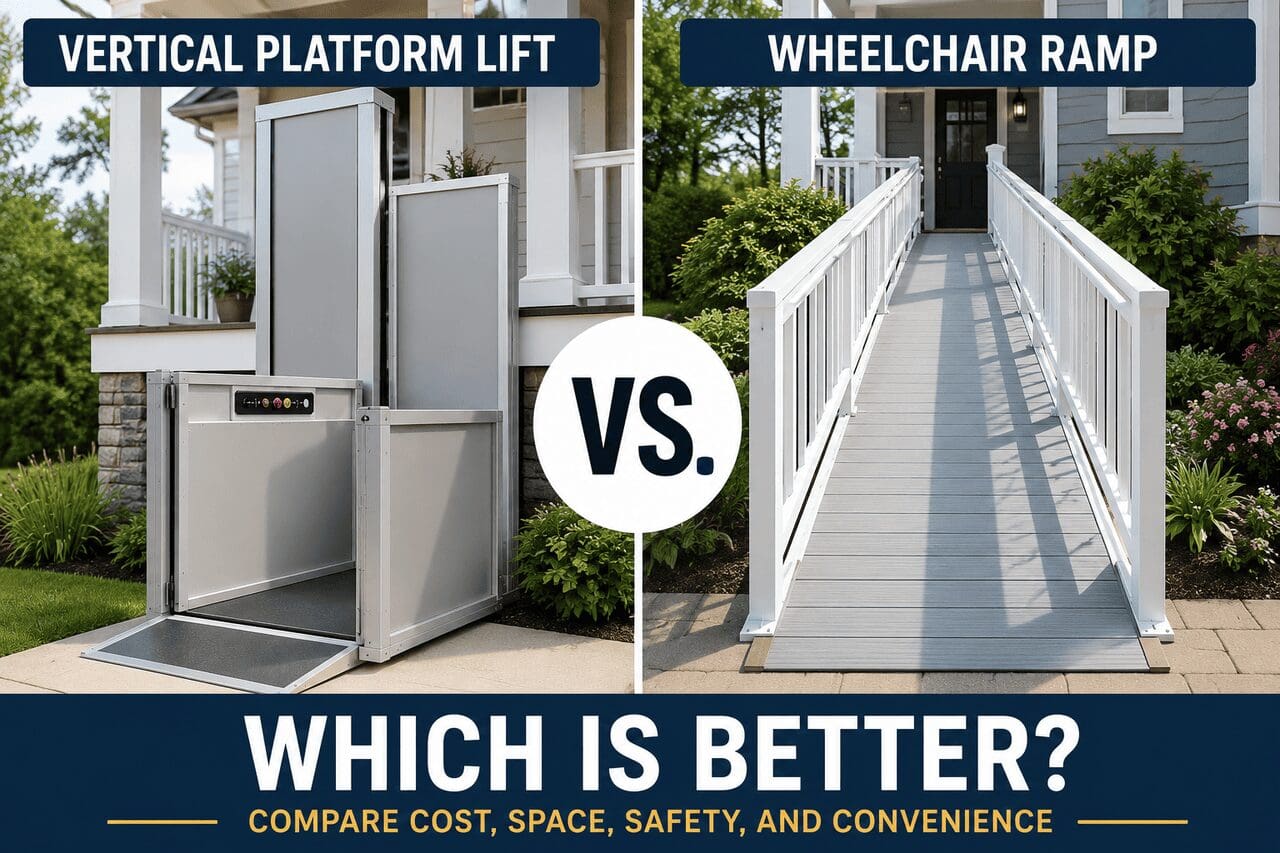
When improving accessibility at your home, one of the biggest decisions is choosing between a vertical platform lift and a wheelchair ramp. Both solutions provide safer access for individuals with limited mobility, but they serve different purposes and are better suited to different homes and lifestyles.
For homeowners with elevated entrances, raised foundations, or multi-level properties, selecting the right accessibility solution can improve independence, safety, and long-term convenience.
At Elevator-Lift Systems, Inc., we’ve helped homeowners throughout Bluffton, Beaufort, Hilton Head, Charleston, Savannah, and surrounding South Carolina and Georgia communities choose accessibility solutions that fit their homes and mobility needs.
This guide compares vertical platform lifts and wheelchair ramps to help you decide which option is best for your property.
What Is a Vertical Platform Lift?
A vertical platform lift (VPL) is a powered accessibility lift designed to transport individuals using wheelchairs, scooters, walkers, or other mobility devices between different elevations.
Unlike a residential elevator, a vertical platform lift typically travels shorter distances and is commonly installed at:
- Front entrances
- Elevated homes
- Porches
- Decks
- Garages
- Split-level homes
- Commercial entrances
The lift moves vertically using a motorized drive system, allowing users to safely travel from one level to another without navigating stairs.
What Is a Wheelchair Ramp?
A wheelchair ramp provides gradual access between different elevations using a sloped walking surface.
Ramps are commonly installed at:
- Home entrances
- Commercial buildings
- Public facilities
- Churches
- Schools
- Healthcare facilities
Unlike a platform lift, ramps require no electricity or mechanical components.
However, they require considerably more space depending on the elevation being overcome.
Understanding ADA Ramp Slope Requirements
One of the biggest differences between ramps and vertical platform lifts is the amount of space required.
For accessibility, ramps generally follow a 1:12 slope, meaning:
- Every 1 inch of vertical rise requires approximately 12 inches of ramp length.
For homes elevated several feet above ground level, a ramp can quickly become extremely long and occupy a significant portion of the yard.
A vertical platform lift eliminates this challenge by traveling straight up.
Space Requirements
Vertical Platform Lift
One of the biggest advantages of a platform lift is its compact footprint.
Because it travels vertically, it requires significantly less space than a ramp.
Platform lifts are ideal for:
- Smaller lots
- Elevated coastal homes
- Existing homes
- Limited outdoor space
- Homes with landscaping restrictions
Wheelchair Ramp
Wheelchair ramps require much more room.
Long ramps often include:
- Multiple switchbacks
- Intermediate landings
- Guardrails
- Larger foundations
On small residential lots, finding enough space for a properly designed ramp can be difficult.
Installation Comparison
Installing a Vertical Platform Lift
Professional installation typically includes:
- Site evaluation
- Electrical connections
- Structural preparation
- Lift installation
- Safety testing
- Owner training
Most residential installations can be completed relatively quickly once equipment arrives.
Installing a Wheelchair Ramp
Ramp installation may include:
- Concrete work
- Footings
- Framing
- Rail installation
- Deck modifications
- Landscaping adjustments
Although ramps don’t require electricity, they often involve more extensive site work due to their overall size.
Safety Comparison
Both accessibility solutions improve safety, but they do so differently.
Platform Lift Safety Features
Modern vertical platform lifts include:
- Emergency stop buttons
- Non-slip platforms
- Safety gates
- Obstruction sensors
- Smooth starts and stops
- Emergency lowering systems
These features help ensure reliable and safe operation.
Wheelchair Ramp Safety
A properly designed ramp includes:
- Handrails
- Non-slip surfaces
- Edge protection
- Proper slope
- Adequate landings
However, ramps may become slippery during rain, snow, or ice if not properly maintained.
Convenience
When it comes to convenience, platform lifts often have the advantage.
Vertical Platform Lift Benefits
- No long ramp to navigate
- Less physical effort
- Faster access
- Easier for caregivers
- Better for powered wheelchairs
- More convenient for daily use
Ramp Benefits
- No electricity required
- No moving mechanical parts
- Always available
- Minimal operating instructions
Maintenance Requirements
Vertical Platform Lift
Because a platform lift contains mechanical and electrical components, routine maintenance is recommended.
Typical maintenance includes:
- Safety inspections
- Lubrication
- Electrical testing
- Drive system inspection
- Gate adjustments
Professional maintenance helps maximize equipment lifespan and reliability.
Wheelchair Ramp
Ramps require less mechanical maintenance but still need regular inspections.
Homeowners should monitor for:
- Loose handrails
- Damaged decking
- Wood rot
- Rust
- Cracked concrete
- Surface wear
Outdoor ramps also require routine cleaning to prevent slips.
Appearance and Curb Appeal
Many homeowners overlook aesthetics when choosing an accessibility solution.
Platform Lift
Modern platform lifts offer a clean, compact appearance.
Because they occupy less space, they often blend more naturally with the home’s architecture.
Ramp
Long ramps may dominate the front entrance and change the home’s appearance significantly.
On elevated homes, ramps may require multiple turns that become a prominent architectural feature.
Accessibility for Elevated Coastal Homes
Many homes throughout South Carolina and Georgia are elevated to meet flood zone requirements.
For homes in:
- Bluffton
- Hilton Head
- Beaufort
- Charleston
- Savannah
a traditional wheelchair ramp may require dozens of feet of ramp length to reach the primary entrance.
A vertical platform lift provides direct access while occupying only a small footprint.
For elevated coastal homes, platform lifts are often the more practical solution.
Cost Comparison
The overall investment depends on:
- Elevation
- Site conditions
- Materials
- Customization
- Installation requirements
While a simple ramp may cost less initially, larger ramps serving elevated homes can become expensive due to materials and labor.
A platform lift requires a larger upfront investment but often provides greater convenience, improved aesthetics, and long-term functionality.
The best option depends on your property’s layout and accessibility goals.
Which Option Is Better for Aging in Place?
Many homeowners planning to age in place prefer platform lifts because they:
- Reduce physical effort
- Improve independence
- Require less maneuvering
- Offer safer vertical transportation
- Support future mobility needs
As mobility changes over time, a powered lift can continue providing reliable accessibility.
Which Solution Adds More Value?
Both accessibility improvements can increase a home’s usability.
However, platform lifts often appeal to homeowners looking for:
- Long-term accessibility
- Modern appearance
- Compact design
- Improved convenience
- Elevated home access
For many buyers, these advantages make platform lifts an attractive investment.
How to Choose the Right Accessibility Solution
Consider the following questions:
- How much elevation needs to be overcome?
- How much outdoor space is available?
- Will the lift be used daily?
- Is aging in place a priority?
- Does the property have an elevated foundation?
- What is your long-term budget?
- Do you anticipate future mobility needs?
A professional consultation can help determine the best solution for your home.
Why Choose Elevator-Lift Systems, Inc.?
For decades, Elevator-Lift Systems, Inc. has helped homeowners improve accessibility with professionally installed platform lifts and residential elevators.
Our team proudly serves:
- Bluffton
- Beaufort
- Hilton Head
- Charleston
- Savannah
- Surrounding South Carolina and Georgia communities
From the initial consultation through installation and ongoing maintenance, we help homeowners choose solutions that provide long-term safety, reliability, and convenience.
Final Thoughts
Both vertical platform lifts and wheelchair ramps improve accessibility, but the right choice depends on your home’s layout, available space, mobility needs, and long-term goals.
If you have a smaller property, an elevated coastal home, or want a compact, powered accessibility solution, a vertical platform lift is often the better choice.
If space is available and you prefer a non-powered accessibility solution with minimal mechanical maintenance, a wheelchair ramp may meet your needs.
The best way to determine which option is right for your home is through a professional consultation with an experienced accessibility specialist.
Frequently Asked Questions
Is a vertical platform lift safer than a wheelchair ramp?
Both options are safe when properly installed and maintained. Vertical platform lifts include built-in safety features such as gates, sensors, and emergency stop controls, while ramps rely on proper slope, handrails, and non-slip surfaces.
Does a platform lift require electricity?
Yes. Most residential vertical platform lifts operate using electrical power and should be installed by qualified professionals.
How much space does a wheelchair ramp require?
A ramp generally requires about 12 feet of length for every foot of vertical rise, making space an important consideration for elevated homes.
Can a vertical platform lift be installed outdoors?
Yes. Outdoor platform lifts are designed with weather-resistant materials and are an excellent choice for coastal homes and elevated properties.
Which option is better for an elevated beach house?
For many elevated coastal homes, a vertical platform lift is more practical because it requires far less space than a long wheelchair ramp while providing convenient access between ground level and the main entrance.