
Platform Lift vs Home Elevator: What’s the Difference?
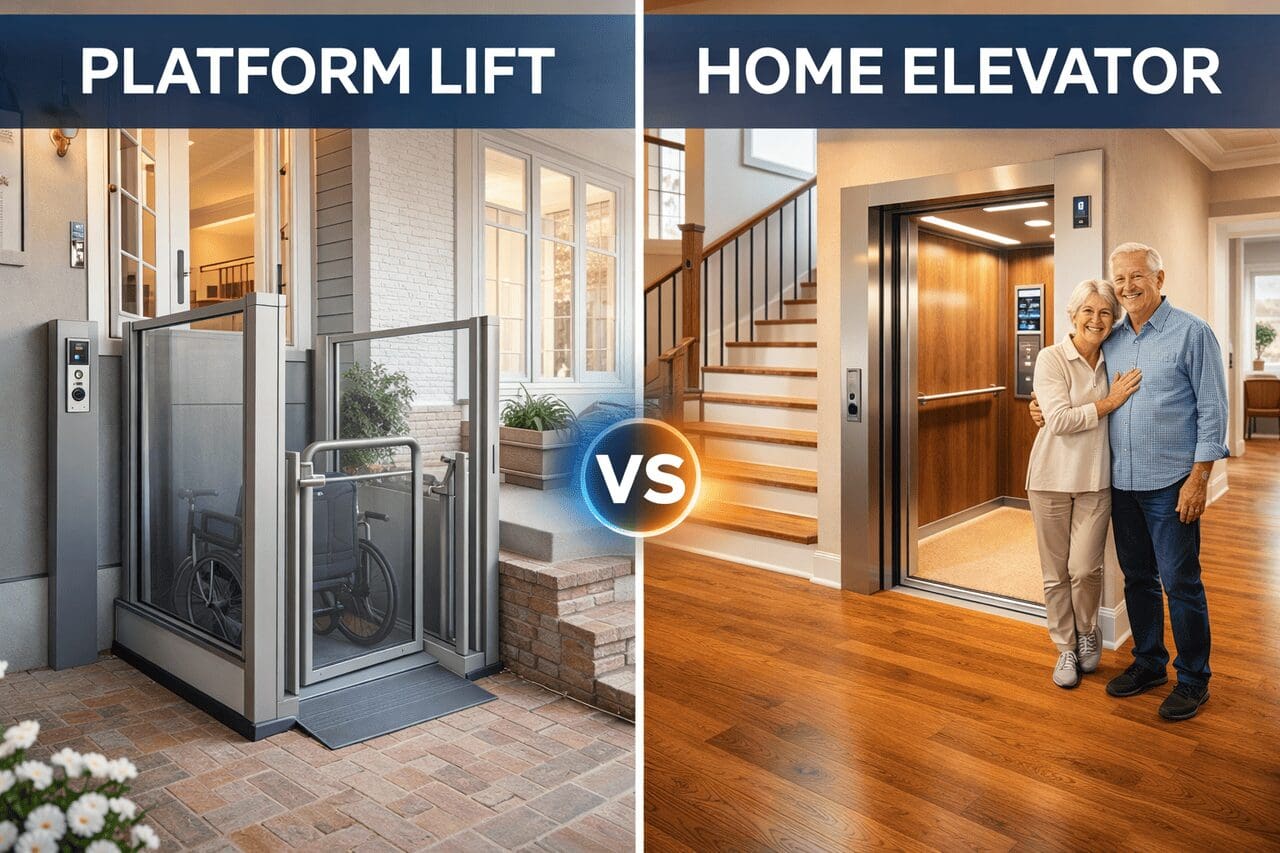
If you are exploring ways to improve accessibility in your home, you have likely come across two popular options: a platform lift and a home elevator. While they may seem similar, they serve different purposes and work best in different situations.
Homeowners in Bluffton, Beaufort, Savannah, Hilton Head, and Charleston often ask which solution is right for their property. The answer depends on space, budget, mobility needs, and long-term plans.
This guide explains the key differences between platform lifts and residential elevators so you can make the best decision for your home.
What Is a Platform Lift?
A platform lift, sometimes called a vertical platform lift, is designed to transport a person standing or using a wheelchair between short vertical distances. It typically travels a single level or a few feet between floors.
Platform lifts are commonly used for:
- Porch or entry access
- Garage to main level access
- Raised patios or decks
- Short interior level changes
They are compact, cost-effective, and often require less structural modification than a full residential elevator.
What Is a Home Elevator?
A home elevator is a fully enclosed cab system that travels between multiple floors of a house. It operates within a shaft and provides smooth vertical transportation similar to commercial elevators but scaled for residential use.
Residential elevators are ideal for:
- Multi-story homes
- Aging in place
- Transporting groceries, laundry, or luggage
- Long-term accessibility planning
- Increasing home value
Home elevators are more comprehensive solutions for full floor-to-floor access.
Space Requirements Comparison
One of the biggest differences between a platform lift and a home elevator is space.
Platform Lift Space Needs
- Smaller footprint
- Minimal or no shaft required
- Often installed near exterior walls
- Ideal for limited areas
Platform lifts are a strong option when space is tight.
Home Elevator Space Needs
- Requires a vertical shaft
- Needs overhead clearance
- Typically includes a small pit
- May require structural framing
A professional installation team can evaluate your home layout and determine which option fits best.
Cost Differences
Cost is often a major deciding factor.
Platform lifts are generally less expensive because:
- They travel shorter distances
- Installation is simpler
- Construction requirements are minimal
Home elevators typically cost more because:
- They serve multiple floors
- Require shaft construction
- Include more complex drive systems
- Offer larger cab sizes
However, while a platform lift may have a lower upfront cost, a home elevator often provides greater long-term value and resale appeal.
Accessibility and Functionality
Platform lifts are excellent for:
- Wheelchair access over short distances
- Entryway accessibility
- Specific mobility challenges
Home elevators are better suited for:
- Full home access
- Multi-generational households
- Transporting multiple passengers
- Carrying heavier loads
If your goal is complete vertical mobility throughout the house, a residential elevator is typically the stronger solution.
Aesthetic and Design Considerations
Platform lifts are often more functional in appearance. While modern models look clean and professional, they are typically simpler in design.
Home elevators offer more customization options, including:
- Interior wall finishes
- Lighting choices
- Glass cab designs
- Decorative doors
For luxury homes in Hilton Head, Charleston, and Bluffton, homeowners often prefer the seamless integration and aesthetic appeal of a residential elevator.
Installation Timeline
Platform lifts usually have:
- Faster installation
- Less construction disruption
- Shorter project timelines
Home elevators involve:
- Framing and shaft construction
- Electrical upgrades
- Inspection and permitting
- Longer installation schedules
An experienced installation team can outline realistic expectations before work begins.
Maintenance Requirements
Both platform lifts and home elevators require regular Maintenance.
Routine service includes:
- Inspecting drive systems
- Checking safety mechanisms
- Testing controls
- Ensuring proper leveling
Prompt Repairs & Service help prevent downtime and extend system lifespan.
Because residential elevators are more complex systems, they may have slightly more involved maintenance needs over time.
When a Platform Lift Makes Sense
A platform lift may be right if:
- You only need access to one raised entry
- Your budget is limited
- Space restrictions prevent a full shaft
- You want minimal structural changes
Platform lifts are practical and efficient solutions for targeted mobility challenges.
When a Home Elevator Is the Better Investment
A residential elevator may be the smarter long-term investment if:
- You have multiple floors
- You plan to age in place
- You want to increase home resale value
- You prefer a fully enclosed system
- You want long-term flexibility
In growing markets like Savannah, Beaufort, and Charleston, accessibility features can significantly enhance property appeal.
Can You Upgrade Later?
Yes. Some homeowners start with a platform lift and later upgrade to a full home elevator.
Modernizations can also update older systems to improve safety, performance, and design without full replacement.
Planning with a knowledgeable professional ensures you make the right decision the first time.
Final Thoughts
Choosing between a platform lift and a home elevator depends on your home’s layout, your mobility needs, and your long-term goals.
Platform lifts are efficient, cost-effective, and ideal for short vertical travel.
Home elevators offer comprehensive multi-floor access, enhanced comfort, and greater resale value.
If you are unsure which option fits your home in Bluffton, Beaufort, Savannah, Hilton Head, or Charleston, a professional consultation can evaluate your structure and recommend the most practical solution.From Installations to ongoing Maintenance, responsive Repairs & Service, and future Modernizations, selecting the right partner ensures your investment performs reliably for years to come.